Used EV battery health should be near the top of the checklist for Puyallup shoppers considering an electric vehicle in 2026. Mileage still matters, but an EV adds another important question: how much usable battery capacity remains?
A used electric vehicle can look clean, drive smoothly, and fit the monthly budget while offering less real-world range than it did when new. That does not automatically mean the battery is failing. Lithium-ion batteries naturally lose some capacity as they age.
The challenge is knowing how much degradation is normal for the vehicle you are considering and whether the remaining range still works for your routine.
For buyers around Puyallup, South Hill, Tacoma, Sumner, Graham, and the wider Pierce County area, battery condition should be compared with charging access, warranty coverage, Washington registration costs, price, and daily driving needs.
A good used EV is not simply the one with the lowest price. It is the one whose battery, range, history, and ownership costs still make sense after you drive it home.
Why Used EV Battery Health Matters More Than Mileage Alone
Traditional used-car shoppers often start with mileage. A lower-mileage gasoline vehicle may have less engine, transmission, suspension, or interior wear than a similar vehicle with far more miles.
EVs still have tires, brakes, suspension, steering, climate systems, and electronics that need inspection. However, the high-voltage battery adds another major piece of the value equation.
The battery stores the energy that determines driving range. As usable capacity decreases, the vehicle may travel fewer miles between charges even when everything else works normally.
That makes battery condition particularly important for buyers who commute between Puyallup and Tacoma, drive into Seattle, make weekend mountain trips, or cannot charge every night.
State of Health Helps Describe Remaining Battery Capacity
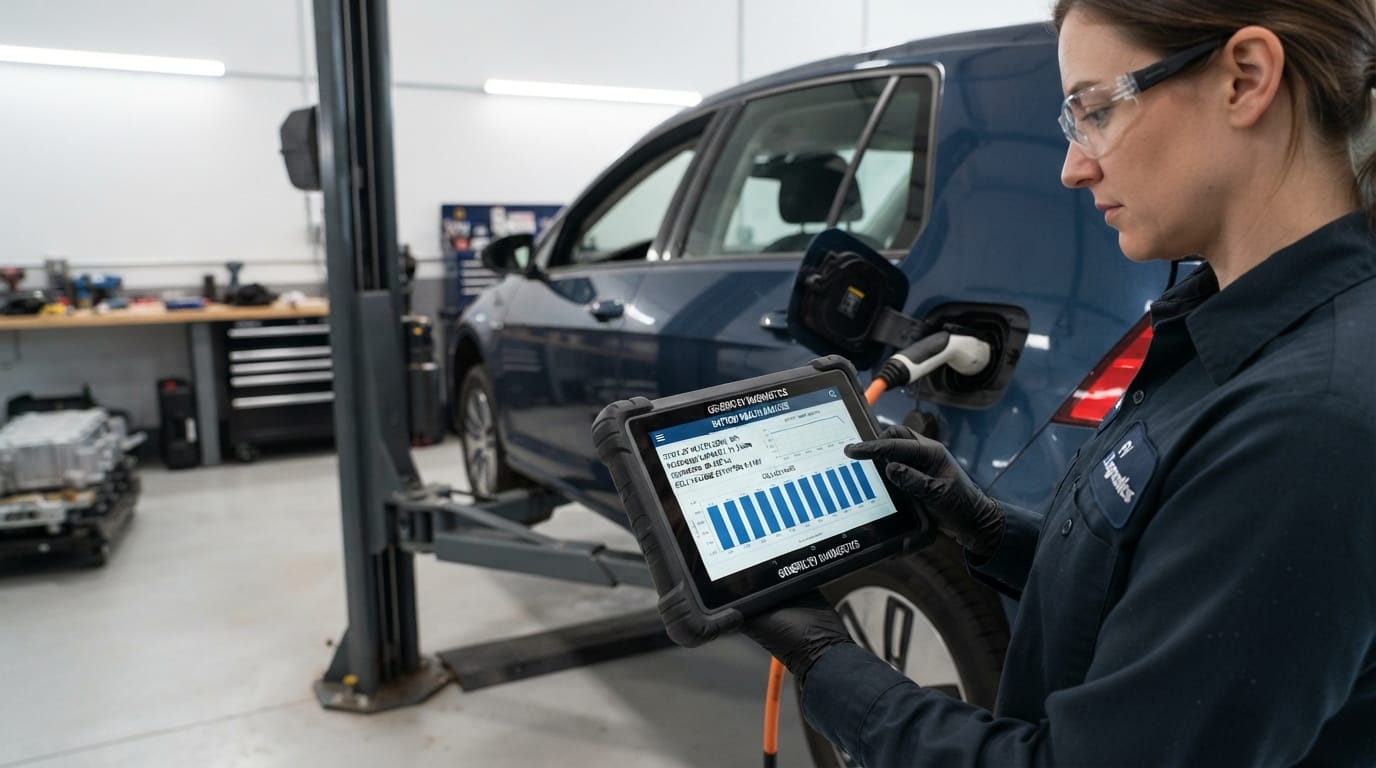
Battery state of health, often shortened to SOH, generally describes how much usable capacity remains compared with the battery when it was newer.
For example, a battery with less usable capacity than when new may still function normally but provide reduced range.
The exact way state of health is calculated can vary by manufacturer, diagnostic tool, and testing service. Buyers should therefore avoid comparing two percentages unless they understand how each one was measured.
A dashboard range estimate is not the same thing as a professional battery-capacity test. Estimated range can change based on recent driving speed, weather, climate-control use, elevation, and other conditions.
Do Not Judge Battery Condition From the Range Display Alone
An EV showing 180 miles on the dashboard does not automatically have poor battery health. The same vehicle may show a different estimate after several days of highway driving, cold weather, or aggressive climate-control use.
Likewise, a high range estimate after slow city driving does not prove that the battery is in excellent condition.
When possible, compare diagnostic battery information with the vehicle’s original usable capacity and expected range. Check service records and look for battery-related warning messages.
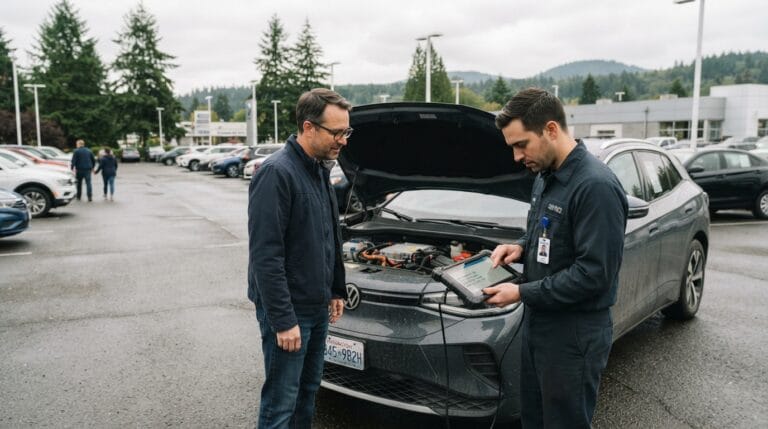
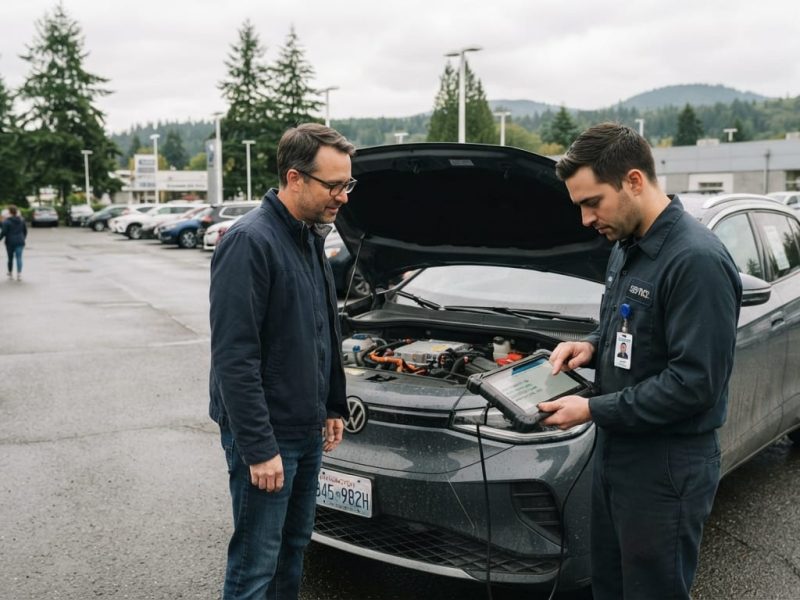
A qualified EV inspection can also help identify charging faults, cooling-system issues, damaged high-voltage components, or unusual cell behavior that a normal test drive may not reveal.
If you are still comparing electric vehicles with other powertrains, our used plug-in hybrid guide for Puyallup explains when a PHEV may make more sense than going fully electric.
Battery Age, Climate, Charging, and Design Can All Affect Degradation
There is no single mileage number that tells you when an EV battery is worn out.
Battery life depends on several factors. Age matters, but so do battery chemistry, thermal management, climate, charging patterns, and how the vehicle was used.
Modern EVs commonly use active battery-management systems to protect the pack. These systems control charging behavior and, on many vehicles, help regulate battery temperature.
Extreme heat can accelerate battery aging. Cold temperatures can temporarily reduce range and charging performance even when long-term battery condition is good.
Frequent fast charging can also affect some batteries differently from slower charging, although the effect varies significantly between vehicle designs.
The important point is not to fear every older battery. It is to inspect the actual vehicle instead of judging only by age.
Check the Battery Warranty Before You Compare Prices
Battery warranty coverage can change the value of two otherwise similar used EVs.
The U.S. Department of Energy notes that manufacturers commonly offer EV battery warranties around eight years or 100,000 miles, although exact coverage varies by manufacturer and vehicle.
Some warranties cover complete battery failure. Others may also provide protection when usable capacity drops below a specific threshold during the warranty period.
Read the actual warranty terms for the exact VIN and model year. Do not assume every EV from the same brand has identical coverage.
Confirm What Warranty Coverage Transfers to the Next Owner
A used EV may still have several years of battery coverage remaining, but buyers should verify that rather than assume it.
Ask whether the original high-voltage battery warranty transfers to later owners. Check the in-service date because warranty time usually begins when the vehicle was originally sold or placed into service, not when you buy it used.
Also check whether the battery was previously replaced under warranty or recall. A replacement pack may have different paperwork or coverage terms.
Keep in mind that battery warranties usually have conditions and exclusions. Damage from collisions, flooding, unauthorized modifications, or improper repairs may be treated differently from normal capacity loss.
Before buying, run the VIN and review open safety campaigns. Our recall-safe used car buying guide explains how VIN checks, safety recalls, and repaired driver-assistance systems should fit into a used-vehicle inspection.
How Puyallup Buyers Should Compare a Used EV in 2026
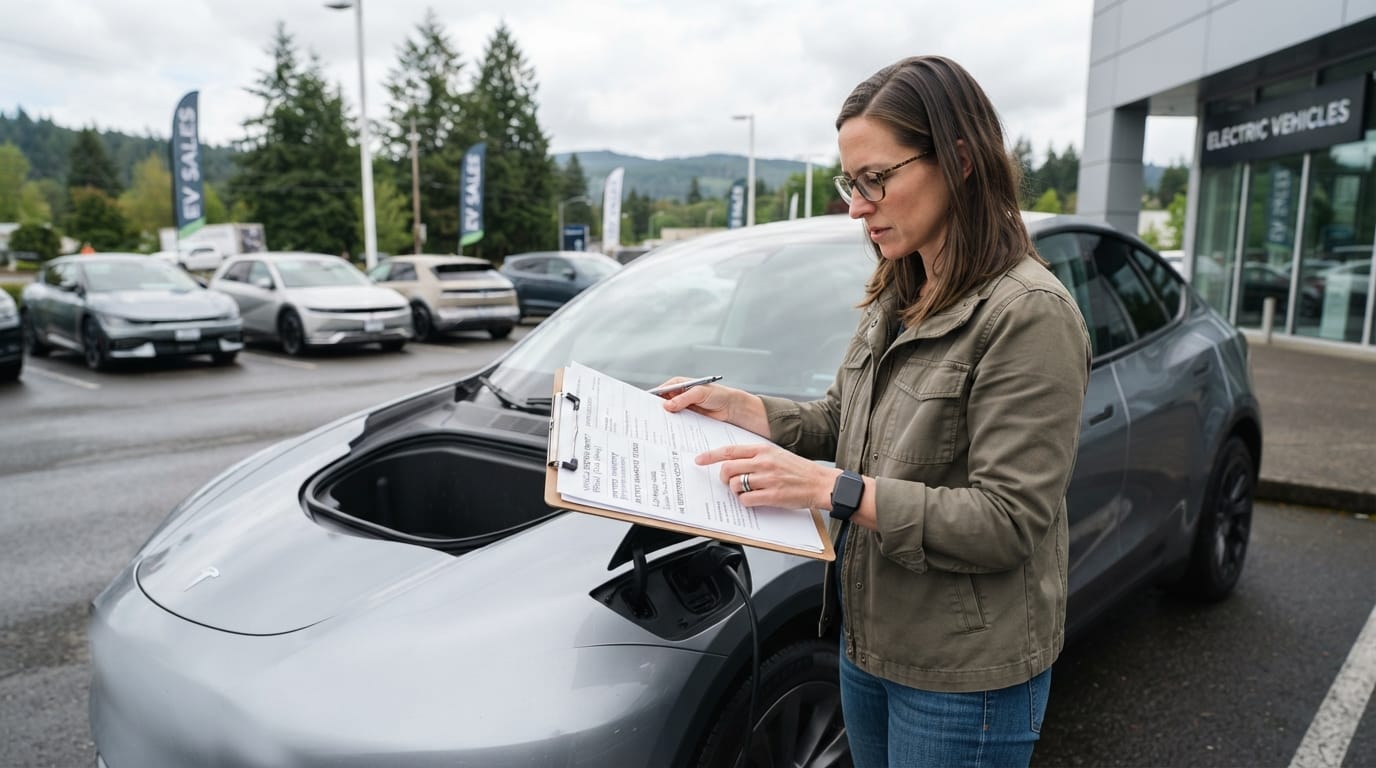
Battery condition is important, but it should not become the only thing you check.
A strong used EV purchase combines acceptable battery health with a realistic charging plan, sound mechanical condition, affordable insurance, manageable registration costs, and financing that fits the household budget.
Start by defining how many miles you actually drive on a normal day. Then add a comfortable range buffer for winter weather, detours, errands, and battery aging.
If your commute is 40 miles round trip, you probably do not need the longest-range EV on the market. On the other hand, buying a vehicle whose winter range barely covers your daily driving can create unnecessary stress.
Compare Range, Charging, Price, and Total Ownership Cost
Home charging can make EV ownership much easier. Buyers with a garage, driveway, or reliable overnight charging location can often begin each morning with enough energy for normal daily driving.
Apartment residents or shoppers without home charging need to look more carefully at workplace and public charging options.
Also check the charging speed supported by the vehicle. An older EV may have enough range for your commute while charging more slowly on road trips than newer models.
Price matters too. A cheaper EV with significantly reduced capacity may not be a better value than a slightly more expensive example with better battery condition and remaining warranty.
Include Washington Registration Fees in Your Budget
Washington EV ownership includes registration charges that gasoline-car buyers may not face in the same way.
The state Department of Licensing currently lists separate electric-vehicle and transportation-electrification fees in addition to normal registration charges. State legislation also increased several EV and hybrid fees and added inflation adjustments beginning in 2026.
That does not make an EV a poor value. It simply means the purchase price and monthly loan payment do not tell the whole story.
Before signing, estimate registration, insurance, charging, tires, expected maintenance, and financing interest.
Insurance can vary significantly between EV models because repair costs, vehicle value, parts availability, and technology can affect premiums. Our guide to used cars with lower insurance costs in Puyallup explains why getting a quote before purchase can prevent a budget surprise.
A pre-purchase inspection remains useful even though EVs generally need less routine powertrain maintenance than gasoline vehicles.
Check tires carefully. EV torque and vehicle weight can make tire condition important. Look for even tread wear and confirm that all four tires are appropriate for the vehicle.
Inspect the brakes as well. Regenerative braking can reduce friction-brake use, but Washington’s wet climate can still contribute to corrosion when conventional brakes are used less often.
Suspension, wheel bearings, climate control, charging ports, cabin electronics, cameras, sensors, and driver-assistance systems should also work correctly.
Finally, review the title and accident history. High-voltage battery damage after a severe collision or flood deserves professional evaluation.
The U.S. Department of Energy’s Alternative Fuels Data Center explains that EV batteries are designed for extended life but eventually wear. It also notes that many manufacturers provide warranties around eight years or 100,000 miles and recommends asking about model-specific battery life and coverage. You can review the Department of Energy’s EV consumer information.
Current 2026 used-EV data also shows why battery testing is becoming more useful. One September market dataset covering more than 2,000 inspected used EVs reported a median remaining tested capacity of about 95%. That does not mean every used EV retains that amount, but it shows why buyers should ask for actual battery information rather than assume an older EV is automatically near the end of its life.
If you want the broader market overview, read our used EV deals in Puyallup guide.
Good used EV battery health does not require a perfect 100% reading.
The better question is whether the remaining capacity, expected range, warranty, vehicle condition, price, and charging setup work together for your needs.
A well-maintained used EV with some normal battery degradation can still be a practical daily driver. A low-priced EV with unclear battery condition, limited range, poor charging access, and expensive financing may be a much weaker deal.
Shop with a battery-first mindset, but evaluate the whole vehicle.
For Puyallup buyers in 2026, that approach can make the difference between an EV that fits naturally into everyday life and one that feels like a compromise every time you need to charge.