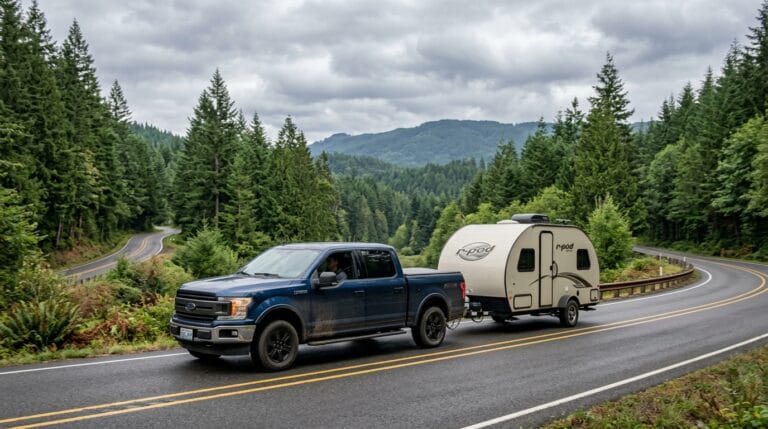
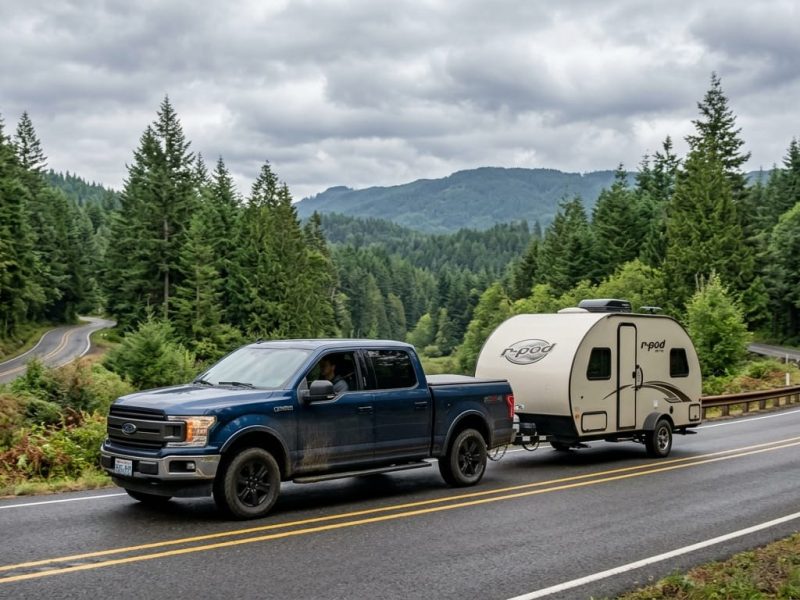
Used trucks for towing in Puyallup are a smart choice for drivers who need more than basic transportation. Whether you are towing a boat to the lake, hauling a camper for weekend trips, carrying work equipment, pulling a utility trailer, or moving outdoor gear around Washington, the right used truck can make life easier. The wrong truck, however, can become expensive, unsafe, and frustrating.
Many buyers focus only on towing capacity, but that number is only one part of the story. Payload, gross vehicle weight rating, gross combined weight rating, axle rating, engine size, transmission, hitch setup, brake controller, tire condition, maintenance history, and financing all matter. A truck may look powerful on the lot, but that does not automatically mean it is the right truck for your trailer.
At Puyallup Cars and Trucks, this topic connects naturally with our existing guides on used truck inspection tips, avoiding hidden fees when buying a used vehicle, and best AWD used vehicles for Washington terrain. If you plan to tow, the goal is not just to buy a truck that looks tough. The goal is to buy one that matches your real load, your budget, and your daily driving needs.
Why Towing Buyers Need to Look Beyond the Advertised Tow Rating
The advertised tow rating is important, but it can be misleading when viewed alone. A truck’s maximum towing number usually assumes the right configuration, proper equipment, limited cargo, and safe weight distribution. In real life, buyers add passengers, tools, coolers, camping gear, hitch equipment, fuel, and cargo in the bed. All of that weight matters.
This is why payload is so important. Payload is how much weight the truck can carry inside the cab and bed. That includes passengers, luggage, tools, cargo, and trailer tongue weight. If you ignore payload, you may technically stay under the tow rating while still overloading the truck. That can affect braking, steering, suspension wear, tire safety, and overall control.
Tow rating and payload are not the same thing
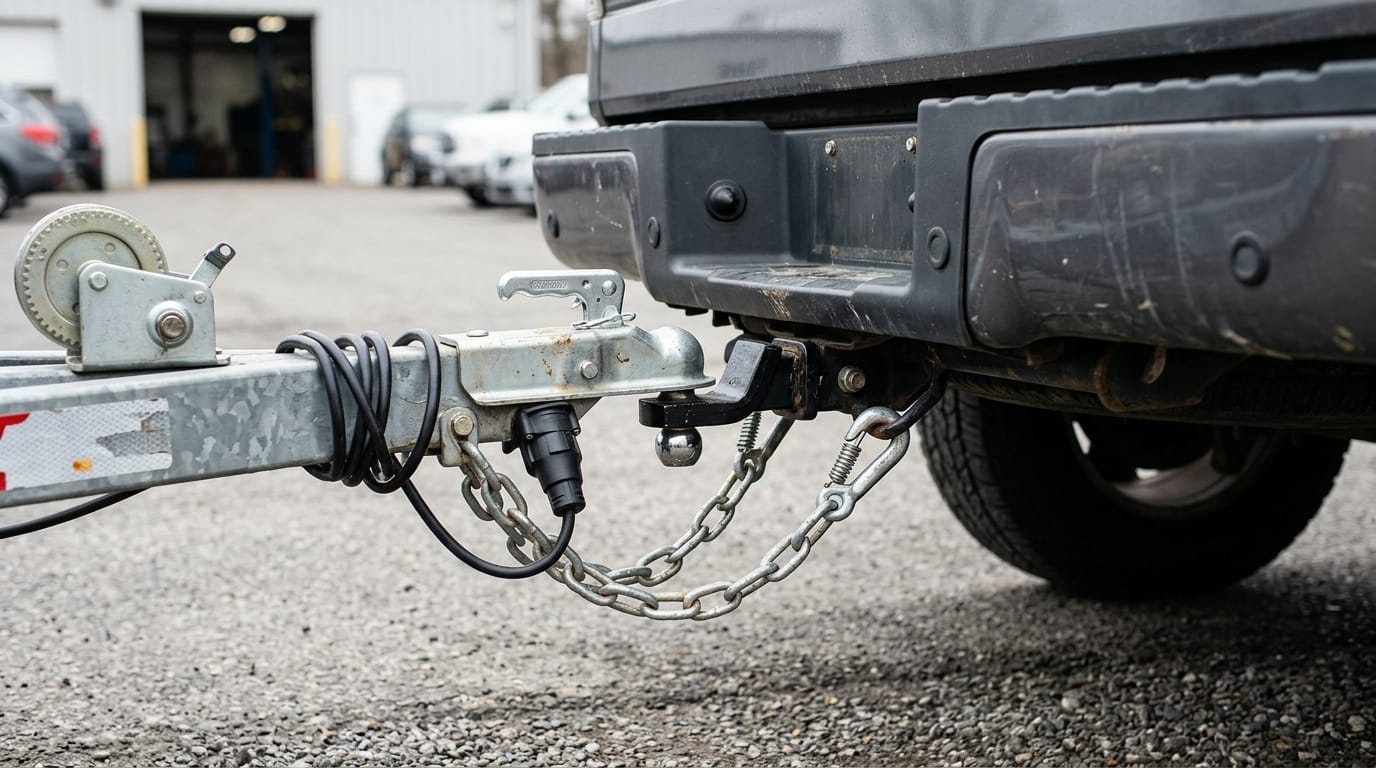
Tow rating tells you how much the truck may be able to pull. Payload tells you how much the truck can carry. A buyer towing a travel trailer should care about both. Trailer tongue weight usually presses down on the hitch and counts against payload. If a truck has a high tow rating but a lower payload rating, it may not be ideal for heavier campers or trailers with more tongue weight.
For example, a family towing a camper may load the truck with two adults, kids, luggage, a cooler, bikes, tools, and camping supplies. That weight reduces the payload available for tongue weight. If the numbers are close, the setup may not be as safe or comfortable as it looks on paper.
Why half-ton trucks are not all equal
Many buyers search for half-ton trucks because they want a balance of towing ability, comfort, and daily drivability. But not every half-ton truck is configured the same way. Engine, axle ratio, cab size, bed length, trim level, towing package, suspension, tires, and options can all change real capability.
A crew cab luxury trim may have less payload than a simpler work-focused trim because extra features add weight. A truck with a factory tow package may be better prepared than a similar-looking truck without one. This is why buyers should check the actual door sticker, owner’s manual, and vehicle-specific ratings instead of assuming all models are the same.
Why heavy-duty trucks may make sense for frequent towing
If you tow often or pull heavier trailers, a three-quarter-ton or one-ton truck may be a better fit. Heavy-duty trucks usually offer stronger frames, higher payload capacity, stronger axles, upgraded cooling, and better stability under load. They may cost more upfront, but they can reduce stress if your trailer is heavy or your towing needs are regular.
That does not mean every buyer needs a heavy-duty truck. If you only tow a small utility trailer a few times a year, a midsize or half-ton truck may be enough. The right choice depends on your trailer weight, cargo, passengers, driving distance, terrain, and comfort level.
Washington drivers should think about terrain and weather
Puyallup drivers often tow in conditions that are not perfectly flat or dry. Trips around Washington can include hills, rain, mountain passes, boat ramps, campgrounds, gravel access roads, and busy highways. A truck that feels fine around town may feel very different when pulling a loaded trailer uphill or braking downhill in wet weather.
This is why drivetrain, brakes, tires, and transmission condition matter. Four-wheel drive or all-wheel drive may be useful for certain conditions, but it does not increase legal towing capacity by itself. Good tires, proper trailer brakes, correct hitch setup, and smart driving habits are still essential.
Trailer brakes, hitch setup, and safety chains matter
Buyers should never treat the truck as the only important part of the towing setup. The trailer matters too. Brakes, lights, safety chains, coupler condition, hitch rating, ball size, wiring, tires, and weight distribution all affect safety. Washington’s official trailer brake rules are available here: Washington RCW 46.37.340 trailer brake requirements.
Before financing a used truck for towing, ask whether the truck has a factory tow package, trailer brake controller, correct receiver hitch, transmission cooler, tow/haul mode, and wiring connections. If those items are missing, you may need to budget for upgrades.
What to Check Before Financing a Used Towing Truck
Before financing a used truck, start with your trailer, not the truck. Know what you plan to tow. Write down the trailer’s empty weight, loaded weight, gross vehicle weight rating, tongue weight, and brake setup. If you do not know these numbers, estimate carefully and leave a safety margin. Buying the truck first and calculating later can lead to regret.
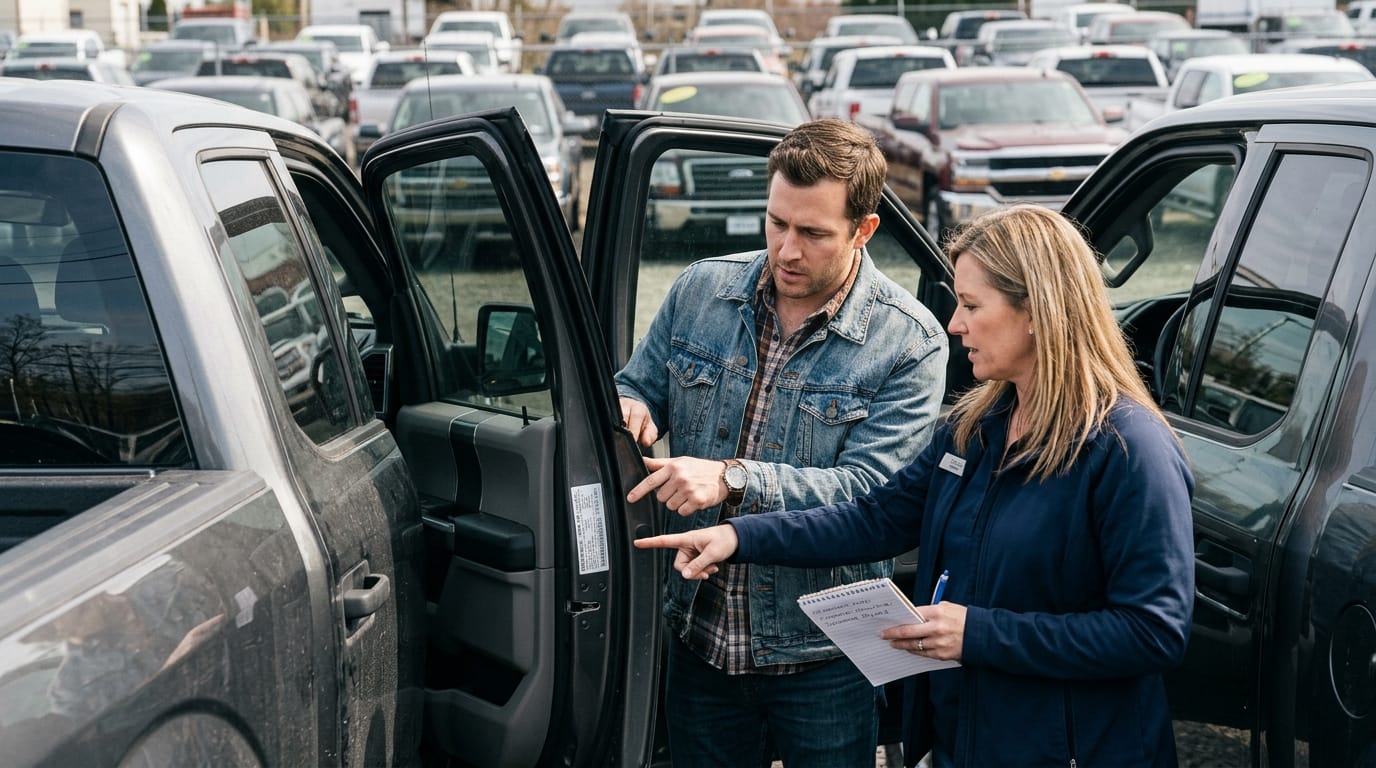
Next, compare the truck’s actual ratings. Check the driver-side door jamb sticker, owner’s manual, manufacturer towing guide, and equipment list. Do not rely only on a generic online number for the model. Two trucks with the same badge may have different capabilities.
This step is especially important when comparing used Ford F-150, Chevy Silverado, GMC Sierra, Ram 1500, Toyota Tundra, Nissan Titan, Ford Super Duty, Chevy Silverado HD, GMC Sierra HD, and Ram heavy-duty models. The name on the tailgate only tells part of the story. The configuration tells the rest.
A used towing truck inspection checklist
Start with the engine and transmission. Towing adds strain, so smooth shifting, clean fluid, stable temperatures, and maintenance records matter. Listen for rough idle, slipping, hard shifts, delayed engagement, or warning lights. If the truck has been used for heavy towing, maintenance history becomes even more important.
Check the brakes carefully. A towing truck needs strong braking performance. Look for vibration, squeaking, soft pedal feel, pulling, or brake warning lights. Inspect tires for uneven wear, age, load rating, and tread depth. Tires that are not properly rated or are badly worn can create safety issues under load.
Inspect suspension and frame condition. Look for sagging, rust, damage, bent components, leaking shocks, worn bushings, or signs of hard use. Check the hitch receiver for rust, cracks, poor installation, or mismatched rating. Review the wiring connector and test trailer light functions if possible.
Buyers should also look inside the bed. A heavily dented bed, damaged tailgate, fifth-wheel holes, gooseneck setup, or worn hitch area may suggest the truck worked hard. That is not automatically bad, but it means the inspection should be more careful.
How financing should fit your real towing budget
When financing a used truck, do not build the budget around the payment alone. Towing trucks can have higher fuel costs, insurance costs, tire costs, maintenance needs, and repair expenses. If you need towing accessories, brake controller upgrades, hitch equipment, weight distribution setup, or new tires, include those in the real budget.
Ask for the full out-the-door price before signing. Review taxes, dealer fees, warranty options, financing terms, down payment, trade-in value, and monthly payment. A truck that fits the tow rating but stretches your budget too far may not be the right choice. For budget protection, review our guide to hidden fees and misleading listings.
A good towing truck should make your life easier, not create stress every time you hook up a trailer. The right truck will match your trailer weight, carry your passengers and cargo safely, handle Washington roads confidently, and fit your budget after fuel, insurance, and maintenance are included.
The bottom line is simple: do not buy a used truck for towing based on looks alone. Check the ratings, inspect the equipment, understand payload, confirm the hitch setup, review maintenance history, and compare the full ownership cost before financing. A smart towing purchase starts with the numbers and ends with confidence on the road.