
Negative equity car loans are becoming a bigger concern for buyers in 2026, especially for drivers who want to trade in their current vehicle before the loan is paid down. If you owe more on your car, truck, or SUV than it is worth, that difference is called negative equity. Many people also call it being “upside down” on a car loan.
For Puyallup buyers, this matters because rolling old debt into a new vehicle can make the next purchase more expensive from day one. A buyer may feel like they are solving one problem by getting a newer car, but if the old loan balance gets added to the new loan, the monthly payment, interest cost, and total debt can all increase.
This does not mean you can never trade in a vehicle with negative equity. Sometimes a trade still makes sense, especially if the current vehicle is unreliable, unsafe, too expensive to repair, or no longer fits your needs. But the decision should be made carefully. The worst move is to focus only on whether the monthly payment “fits” while ignoring how much debt is being carried forward.
This guide explains how negative equity car loans work, why they are risky, and what Puyallup shoppers can do before trading in a vehicle in 2026.
What Negative Equity Means When You Trade In A Vehicle
Negative equity happens when your remaining loan balance is higher than your vehicle’s trade-in value. For example, if you owe $24,000 on your current SUV but the dealership can offer $19,000 for it, you have $5,000 in negative equity. That $5,000 does not disappear. It must be paid somehow.
Some buyers pay the difference out of pocket. Others roll it into the next loan. Rolling it in may feel easier because it avoids a large upfront payment, but it also means you are financing old debt on top of the next vehicle’s price. That can put you behind on the new loan immediately.
Why Rolling Old Debt Into A New Loan Can Hurt

When negative equity is added to a new loan, the buyer starts with a larger balance than the vehicle itself is worth. This can make it harder to refinance, harder to trade later, and easier to fall into another upside-down situation. If the loan term is long, the problem can last for years.
Longer terms may lower the monthly payment, but they can increase the total interest paid. They also slow down how quickly the loan balance drops. That matters because vehicles usually depreciate over time. If the car loses value faster than the loan is paid down, negative equity can continue or grow.
Before shopping, review our guide on used car buying in 2026. It explains why buyers should compare the full deal, not just the advertised price or monthly payment.
The Monthly Payment Can Hide The Real Problem
A payment that looks affordable is not always a good deal. A dealership or lender may be able to stretch the loan term to make the payment fit, but that does not mean the vehicle is affordable long term. If old debt, taxes, fees, warranties, and interest are all packed into one loan, the buyer may be paying far more than expected.
This is why every buyer should ask for the full breakdown: vehicle price, trade-in value, remaining payoff, negative equity amount, taxes, fees, interest rate, loan term, and final financed amount. The monthly payment is only one piece of the decision.
Why Negative Equity Is More Common In 2026
Several factors can push buyers into negative equity. Vehicle prices rose sharply in recent years, many buyers used longer loans, interest rates stayed high, and some shoppers traded vehicles before building enough equity. A car purchased at a high price with a long loan can become difficult to trade if market values shift.
This is especially important for buyers who bought during a hotter market and now want to upgrade, downsize, or switch to a truck, SUV, hybrid, or more fuel-efficient vehicle. The current vehicle may still have a large payoff even if its market value has softened.
Depreciation Does Not Wait For Your Loan Balance
Your vehicle’s value and your loan balance do not always move at the same speed. A car may lose value quickly in the first few years, while a long-term loan pays down slowly at the beginning. This gap is one of the main reasons negative equity happens.
Mileage, accident history, poor maintenance, worn tires, cosmetic damage, and market demand can also lower trade-in value. If your vehicle has high miles or needs repairs, the trade-in offer may be lower than you expected. That makes it even more important to know your payoff before shopping.
How Puyallup Buyers Can Avoid A Bad Negative Equity Deal
The smartest way to handle negative equity car loans is to slow down and compare the full financial picture. You do not need to avoid dealerships. You need to arrive prepared. Know your payoff, understand your vehicle’s condition, research trade-in value, and decide how much extra debt you are comfortable carrying before you test drive anything.
A good dealership conversation should be transparent. You should understand whether you have equity, break-even value, or negative equity before choosing the next vehicle. If the numbers are unclear, ask questions until they make sense.
Check Your Payoff And Trade-In Value First
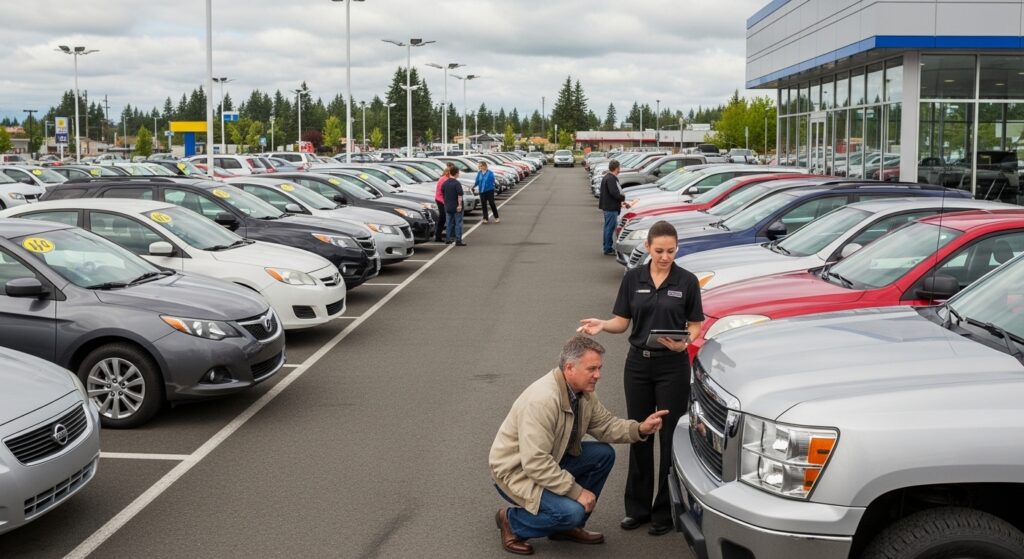
Before you shop, contact your lender and get the current payoff amount. Then compare that number with a realistic trade-in estimate. Do not rely only on what you hope the car is worth. Be honest about mileage, condition, maintenance, tires, brakes, warning lights, and cosmetic damage.
Our article on trade-in tips at Puyallup Cars and Trucks can help you prepare your vehicle before getting an offer. Cleaning the car, gathering service records, and fixing small issues can sometimes improve buyer confidence and trade-in value.
Consider Paying Down The Difference Before Trading
If the negative equity amount is small, paying it down before trading may be the cleanest option. Even an extra few payments can help reduce the gap. If your current vehicle is reliable, waiting a little longer may put you in a better position.
If the vehicle is not reliable, waiting may not be realistic. In that case, compare lower-priced used vehicles instead of stretching into something expensive. A practical used car, truck, or SUV can help you reset the loan more safely than rolling negative equity into a high-priced vehicle.
Choose The Next Vehicle Carefully
If you must roll in negative equity, avoid making the problem worse with the wrong replacement vehicle. Look for a vehicle that fits your actual budget, holds value reasonably well, and does not require an uncomfortable loan term. Buying more vehicle than you need can trap you deeper.
For buyers trying to reduce monthly fuel costs, our guide to fuel-efficient used cars in Puyallup is a helpful starting point. If you need Washington-weather confidence, our guide to best AWD used vehicles in Washington can help you compare practical options.
For a trusted outside source, Edmunds regularly tracks negative equity trends and auto-loan data. Their Q1 2026 auto finance report explains why underwater trade-ins and longer loan terms are becoming a serious buyer concern.
The bottom line is simple: negative equity car loans are not automatically a deal breaker, but they should never be ignored. If you owe more than your vehicle is worth, the safest move is to understand the numbers before choosing the next car. Ask for a clear trade-in value, confirm your payoff, compare financing options, and avoid stretching the loan just to make the payment look smaller.
At Puyallup Cars n Trucks, the goal is to help local shoppers make informed decisions. Whether you are trading in a truck, upgrading to an SUV, looking for a fuel-efficient car, or trying to rebuild credit, the right deal should make sense today and still feel manageable years from now. A smart vehicle purchase is not just about driving away happy. It is about avoiding debt stress after the excitement wears off.